


“रात की अच्छी नींद सिर्फ़ थकान नहीं मिटाती, अगले दिन को बेहतर बनाने की ताकत भी देती है।”
There was a time when sleep came naturally. After a long day, you would simply lie down, close your eyes, and wake up the next morning feeling refreshed. But somewhere after 60, many people notice that nights begin to feel different. Sleep becomes lighter, waking up in the middle of the night becomes more common, and getting a full night’s rest doesn’t always feel as easy as it once did.
For some, it means waking up at 3 AM and struggling to fall asleep again. For others, it means going to bed early but waking up before sunrise. And many simply accept it as another unavoidable part of growing older.
But here’s something worth remembering: your sleep pattern may change with age, but your need for good-quality sleep does not disappear.
When Sleep Starts Changing
According to the National Institute on Aging (NIA), older adults generally need around 7 to 9 hours of sleep, although sleeping patterns can naturally change with age. Older adults may sleep more lightly, wake up more frequently during the night, or become sleepy earlier in the evening.
So, waking up once during the night does not automatically mean something is wrong.
The concern begins when disturbed sleep becomes frequent and starts affecting everyday life.
If you regularly wake up feeling exhausted, struggle to stay alert during the day, depend heavily on afternoon naps, or find yourself unable to concentrate on things you normally enjoy, your sleep deserves attention.
Instead of simply saying, “उम्र के साथ ऐसा होता ही है,” it may be better to ask:
“What is my body trying to tell me?”
Your Day Can Decide How You Sleep at Night
Good sleep doesn’t begin when you switch off the bedroom light.
It begins much earlier.
After retirement, daily routines often become less structured. There may be less physical activity, longer afternoon naps, more television, irregular meal timings, or simply fewer reasons to get out of bed early. While a slower lifestyle can be enjoyable, too much inactivity can affect the body’s natural sleep-wake rhythm.
The NIA recommends maintaining a consistent sleep and waking schedule, staying physically active, getting daylight exposure, and avoiding long or late naps as part of healthy sleep habits.
These aren’t complicated changes.
- A morning walk.
2. A little sunlight.
3. A regular wake-up time.
4. Less screen time before bed.
Small habits can gradually teach the body when it is time to be active and when it is time to rest.
How Common Are Sleep Problems?
Sleep difficulties are not limited to one age group.
A recent report from the Centers for Disease Control and Prevention (CDC) and the National Center for Health Statistics found that inadequate sleep duration and difficulty falling asleep remain common concerns among adults. The data highlights why sleep should be treated as an important part of overall health rather than something we simply have to tolerate.
For older adults, this becomes particularly important because sleep is closely connected with how we feel and function during the day.
A poorly rested morning can mean less energy for a walk, less patience during conversations, reduced enthusiasm for hobbies, or simply feeling like the day is harder than it should be.
Good sleep quietly supports good living.
Why Can Sleep Become Difficult After 60?
There isn’t one universal reason.
Sometimes the reason is physical.
Knee pain, back pain, arthritis, frequent nighttime urination, breathing difficulties, or other health concerns can interrupt sleep. Certain medicines may also influence sleeping patterns.
Sometimes, however, the reason is emotional.
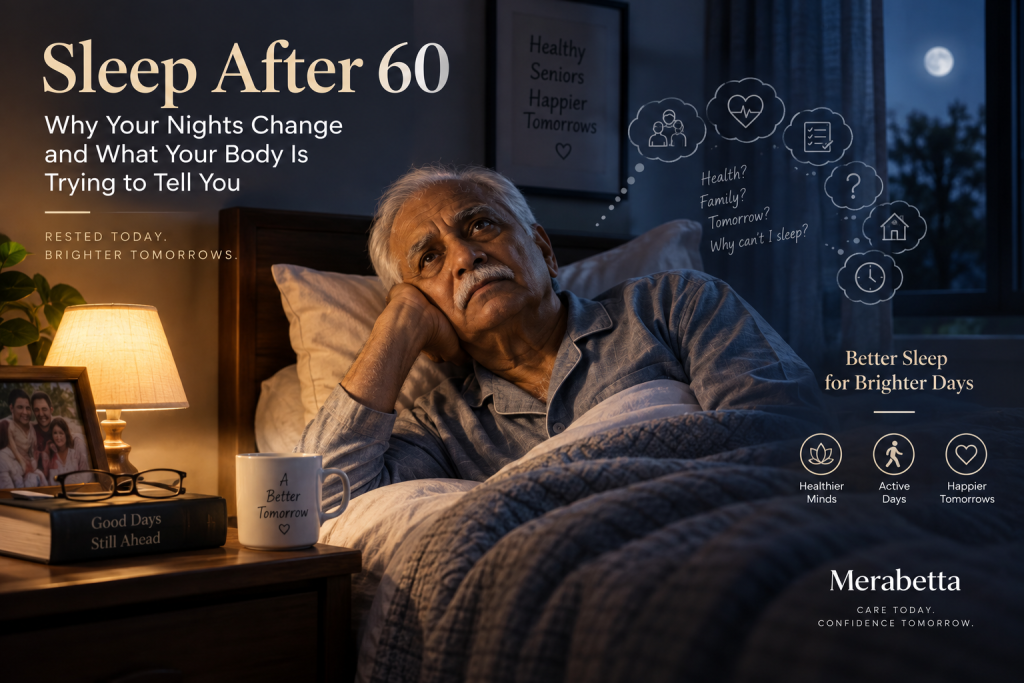
Retirement can bring a major lifestyle change. Children may move to another city or country. Friendships may become less frequent. The house may become quieter. And when everything finally settles down at night, thoughts that were pushed aside during the day can suddenly become louder.
That is why sleep should not always be looked at as an isolated problem.
Sometimes a restless night is connected to something happening during the day.
The Connection Between Sleep and Emotional Wellbeing
Nighttime can make loneliness feel more noticeable.
During the day, there are distractions—television, household activities, visitors, phone calls, errands, and conversations. At night, there is silence.
For someone already feeling isolated, those quiet hours can become a time when worries and memories take over.
This is why families should look beyond simply asking, “Did you sleep properly?”
Ask how the person has been feeling.
Ask whether they have been enjoying their routine.
Ask whether something has been worrying them.
Sometimes a conversation, a familiar voice, or simply knowing that someone is there can make a difficult evening feel lighter.
Healthy aging isn’t only about physical health. Emotional comfort matters too.
Create a Bedroom That Invites Rest
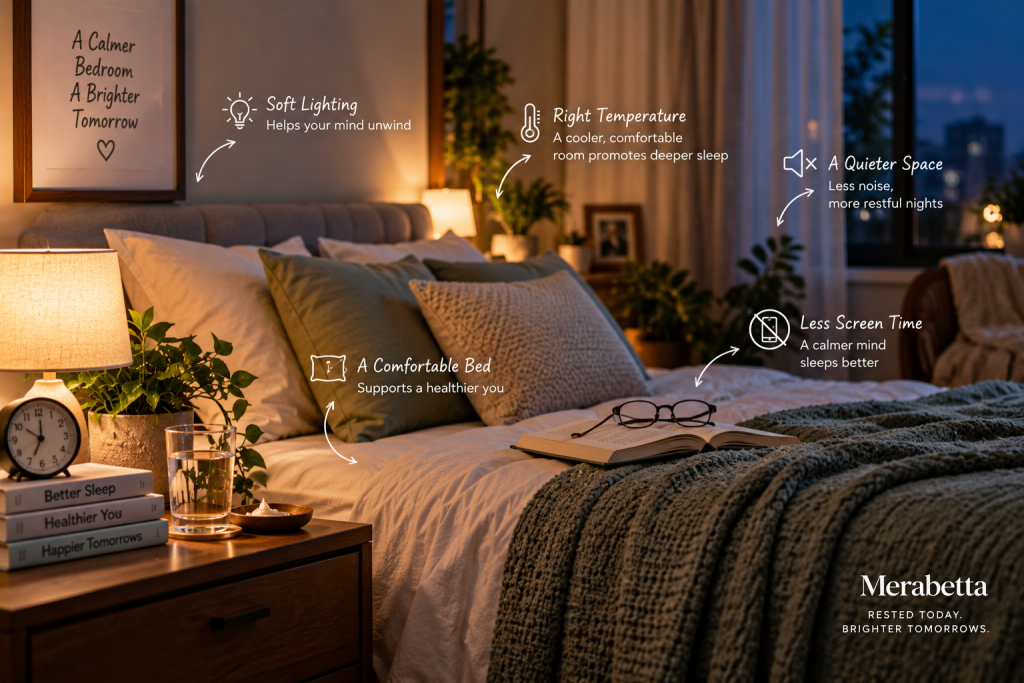
The bedroom should feel like a place where the day slows down.
A comfortable mattress and pillow, suitable room temperature, reduced noise, and softer lighting can make the environment more relaxing. Keeping the television and phone away from the bed can also help reduce stimulation before sleep.
The NIA recommends avoiding screens close to bedtime and being mindful of caffeine, alcohol, and large meals late in the evening. Regular physical activity during the day can also support better sleep.
But beyond these recommendations, creating a small personal bedtime ritual can make a difference.
Perhaps it is reading a few pages of a book.
Perhaps it is listening to calming music.
Perhaps it is writing three things you are grateful for.
The goal isn’t to force yourself to sleep.
It is to give your mind a reason to slow down.
When Should You Pay Attention?
Occasional sleeplessness is something almost everyone experiences.
But persistent problems deserve attention.
If someone regularly has trouble falling asleep, wakes repeatedly throughout the night, feels excessively tired during the day, or notices significant changes in their sleeping habits, it is worth discussing the issue with a healthcare professional.
Most importantly, seniors should avoid assuming that every sleep problem is simply because of age.
Sometimes the underlying cause may be pain, medication, emotional stress, breathing problems, or another health concern that can be addressed.
Don’t just treat the sleepless night. Understand what is causing it.
Families Can Help Too
For families living with or away from aging parents, changes in sleep can sometimes be one of the earliest signs that something has changed.
Maybe your father has started sleeping through most afternoons.
Maybe your mother keeps saying she is tired despite spending enough time in bed.
Maybe they no longer feel energetic enough for their usual morning routine.
These observations shouldn’t immediately create fear.
Instead, they should create conversation.
A simple “How have you been sleeping lately?” can open the door to understanding what is really happening.
And for seniors, asking for support doesn’t mean losing independence.
Sometimes independence simply means having the right support available when you need it.
Better Sleep. Better Days.
Growing older changes many things, but it shouldn’t mean accepting poor sleep without question.
A healthy night’s rest can support a more energetic morning, a clearer mind, better emotional wellbeing, and greater participation in the everyday moments that make life meaningful.
At Merabetta, healthy aging is about more than managing individual health concerns. It is about making everyday life easier, more comfortable, and more reassuring for seniors and their families—with trusted healthcare essentials, senior-focused products, and thoughtful support designed around the realities of aging.
Because care isn’t about taking away independence.
It is about helping people hold on to it.
So tonight, instead of worrying about whether you will sleep perfectly, start with something simpler: a calmer evening, a familiar routine, a little less screen time, and the confidence to listen when your body asks for rest.
Because sometimes, better tomorrows begin with something as simple as a good night’s sleep.
RESTED TODAY.
BRIGHTER TOMORROWS.

References
- National Institute on Aging (NIA) — Healthy sleep and sleep habits for older adults.
- Centers for Disease Control and Prevention (CDC), National Center for Health Statistics — Sleep duration and sleep difficulties among adults.