

The ICMR National Institute of Nutrition reminds us through its Dietary Guidelines for Indians 2024 that nutrition continues to play an important role in maintaining health at every stage of life, with special attention needed for nutritionally vulnerable groups, including older adults. As we cross 65, eating well is no longer simply about filling the stomach. It is about giving the body the right nutrients to maintain strength, energy, mobility and independence. (ICMR National Institute of Nutrition)
“उम्र बढ़ने के साथ खाने की मात्रा नहीं, खाने की गुणवत्ता ज़्यादा मायने रखती है।”
After 65, the body begins to experience changes that can quietly influence appetite, digestion, muscle mass, bone health and energy levels. Many people naturally become less physically active, while the body’s energy requirements may decrease. But needing fewer calories does not mean needing fewer nutrients. In fact, this is the stage of life when every meal has an opportunity to provide something valuable — protein for muscles, calcium for bones, fibre for digestion, vitamins and minerals for overall health, and enough fluids to maintain hydration.
The goal is not to follow a complicated “senior citizen diet”. It is to make everyday Indian food more nourishing, balanced and purposeful.
Eating Less Does Not Mean Eating Less Well
One of the most important changes after 65 is that calorie requirements may reduce, but nutritional requirements remain important. The ICMR-NIN guidelines provide reference balanced diets for normally nourished older adults. For example, their suggested diet for a 65-kg older man provides approximately 1,740 kcal and 62 grams of protein, while the reference diet for a 55-kg older woman provides approximately 1,530 kcal and 56 grams of protein. These are reference examples, not universal prescriptions, because individual needs vary according to body weight, physical activity, health conditions and other factors. (ICMR National Institute of Nutrition)
This is why a plate dominated by refined carbohydrates, fried snacks or sugary foods may provide calories without providing enough of the nutrients the body needs.
A better approach is nutrient density — getting more nutrition from the food you eat.
A bowl of dal, a serving of vegetables, curd, a fruit and a handful of nuts can contribute considerably more nutritional value than a plate filled mainly with refined or highly processed foods.
WHO describes a healthy diet around four basic principles: adequacy, balance, moderation and diversity. It also emphasizes minimally processed foods, whole grains, vegetables, fruits and pulses as important parts of a healthy dietary pattern. (World Health Organization)
Protein: The Nutrient Your Muscles Cannot Ignore
One of the biggest nutritional priorities after 65 is protein.
Ageing is associated with gradual loss of muscle mass and strength, particularly when physical activity and food intake decrease. This matters because muscle is not only about appearance or physical strength. It supports everyday independence — getting out of a chair, climbing stairs, carrying groceries, walking to the market or simply maintaining balance.
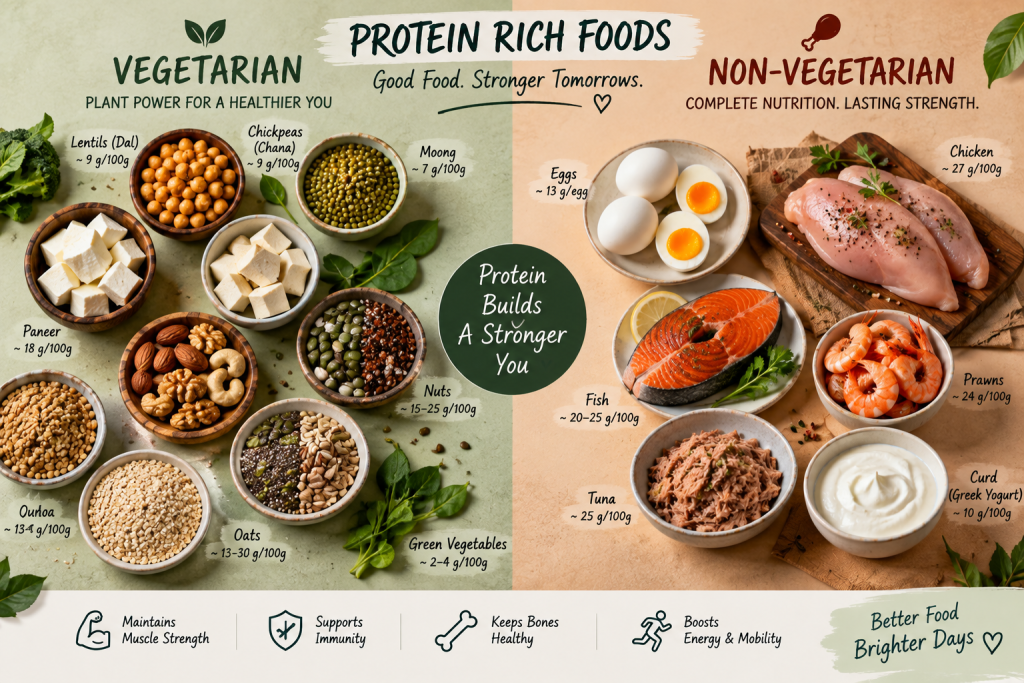
The ICMR-NIN guidelines emphasize protein-rich foods such as pulses, beans, milk and curd, while eggs, fish, poultry and meat can also be included according to individual preference and dietary practices. The guidelines also note that combining cereals and pulses can improve the quality of protein in a vegetarian meal. (ResearchGate)
Scientific research supports paying attention to protein intake in later life. A 2024 systematic review and meta-analysis published in Ageing Research Reviews, which included 38 studies, found that protein supplementation had a positive effect on muscle mass among community-dwelling older adults. Another 2024 systematic review involving older adults with sarcopenia found that combining protein supplementation with resistance exercise was associated with improvements in muscle mass and strength, although the researchers noted that the available evidence was still limited. (PubMed)
For an Indian household, improving protein intake does not necessarily mean reaching immediately for a protein powder.
It can begin with familiar foods: dal, chana, rajma, sprouts, soy, paneer, curd, milk, eggs, fish and lean meats. The right choice depends on dietary preference, medical conditions and individual nutritional requirements.
And importantly, supplements should not automatically replace food. If someone is losing weight unintentionally, has a poor appetite or is at risk of malnutrition, a doctor or qualified dietitian can help determine whether additional nutritional support is needed.
Build the Plate Around Variety
A healthy plate after 65 does not have to look dramatically different from a healthy family meal. It simply needs better balance.
Think of meals as an opportunity to bring different food groups together.
Cereals and millets can provide energy and carbohydrates. Choosing whole grains more often can also increase fibre intake.
Pulses and beans provide protein, fibre and several micronutrients.
Vegetables, especially a variety of colourful and leafy vegetables, provide vitamins, minerals and other beneficial compounds.
Fruits add fibre, vitamins and natural sweetness.
Milk, curd and other dairy foods can contribute protein and calcium, depending on individual tolerance and dietary preferences.
Nuts and seeds can provide healthy fats and nutrients in small portions.
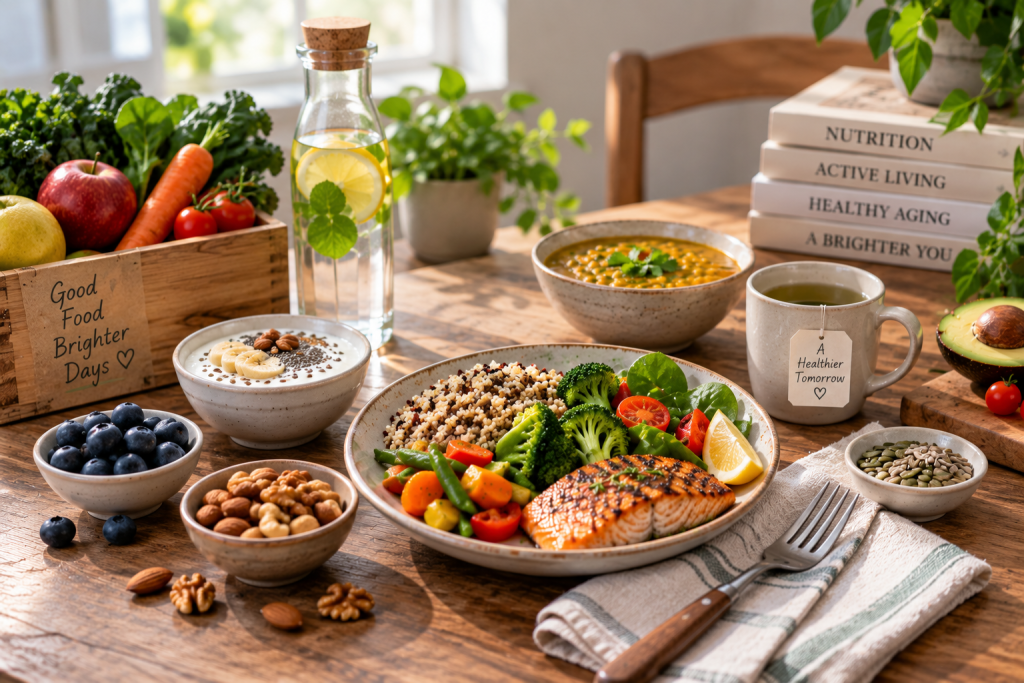
The ICMR-NIN’s reference dietary pattern for older adults includes cereals and millets, pulses, green leafy vegetables, other vegetables, fruits, milk, nuts and seeds, along with appropriate amounts of fats and oils. (ICMR National Institute of Nutrition)
The idea is simple: variety matters more than eating the same “healthy food” every day.
Fibre and Digestion: Keep the Gut Moving
Constipation and digestive discomfort can become more common with age, particularly when physical activity, fluid intake or fibre intake is inadequate.
Fibre-rich foods such as vegetables, fruits, pulses, beans, whole grains, nuts and seeds can form an important part of a balanced diet. WHO recommends that people over 10 aim for at least 25 grams of naturally occurring dietary fibre each day, primarily through foods rather than relying on processed fibre products. (World Health Organization)
However, increasing fibre suddenly can sometimes cause bloating or discomfort. It is better to increase fibre gradually and maintain adequate fluid intake.
This is also where individual health conditions matter. Someone with diabetes, kidney disease, swallowing difficulties or other medical concerns may require a more personalized dietary approach.
Food Should Support Independence, Not Just Health Reports
Perhaps the most important way to think about nutrition after 65 is to connect food with everyday life.
The purpose of eating well is not simply to produce better numbers on a medical report. It is to help a person remain capable of doing the things that make life meaningful — taking a morning walk, visiting friends, playing with grandchildren, travelling, pursuing hobbies, preparing a favourite meal or simply moving around the house with confidence.
WHO notes that diet and physical activity in older age are important determinants of health, wellbeing, functional ability, mobility and independence. (World Health Organization)
That makes nutrition part of healthy ageing itself.
At Merabetta, the larger idea of elder care is not simply about managing illness. It is about making ageing more supported, comfortable and dignified. Food is one of the most everyday forms of that support — something that can help an older adult feel stronger, more energetic and more confident in daily life.
After 65, the question is not simply, “What should I stop eating?”
It is also:
“What should I start giving my body more of?”
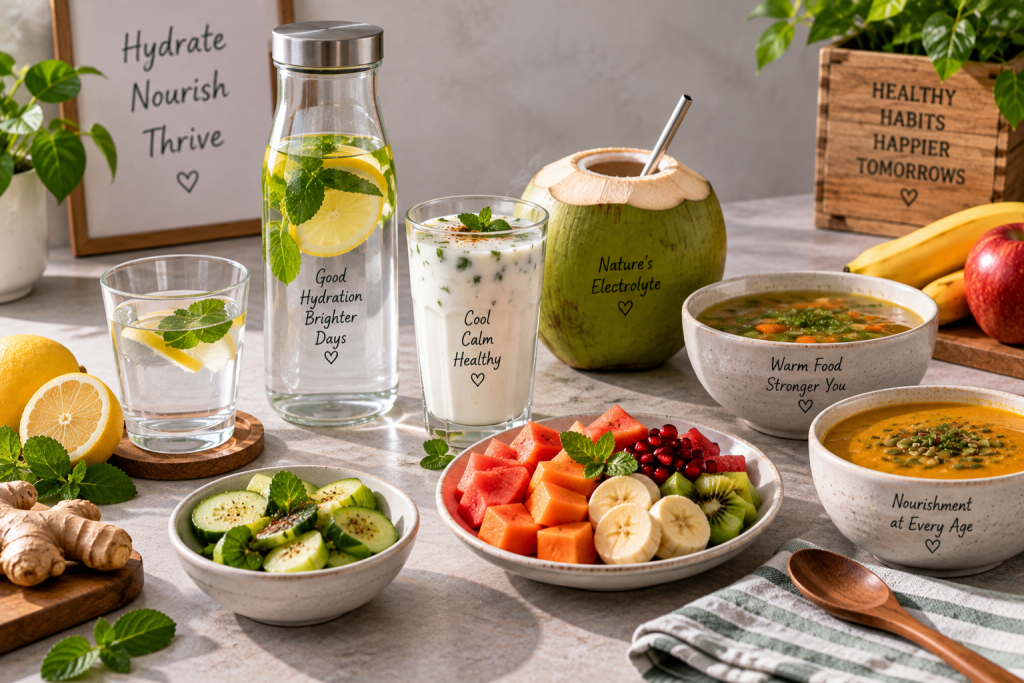
More variety. More nutrient-rich foods. Enough protein. Plenty of vegetables and fruits. Better hydration. And meals that support the strength and independence needed to enjoy the years ahead.
Because healthy ageing does not begin with a prescription. Sometimes, it begins with what is on the plate.
# References for the blog
- ICMR–National Institute of Nutrition — Dietary Guidelines for Indians 2024 (ICMR National Institute of Nutrition)
- WHO — Healthy Diet, 2026 (World Health Organization)
- WHO — Promoting Physical Activity and Healthy Diets for Healthy Ageing (World Health Organization)
- Hettiarachchi et al., Ageing Research Reviews, 2024 — Protein supplementation and muscle mass in older adults (PubMed)
- Systematic Review and Meta-analysis, 2024 — Protein supplementation + resistance exercise in older adults with sarcopenia (PubMed)
- WHO — Supplemental nutrition with dietary advice for older people affected by undernutrition (World Health Organization)
This was only the first part of our journey into understanding nutrition after 65. There’s still so much more to uncover — from essential vitamins and minerals to bone health, changing appetite, preventing nutritional deficiencies, practical meal choices, and how families can make everyday nutrition easier for seniors.
So, don’t miss Part 2!