


“दुनिया को देखने और अपनों की आवाज़ सुनने का सुकून, उम्र के हर पड़ाव पर अनमोल होता है।”
According to the World Health Organization (WHO), more than 25% of people over the age of 60 are affected by disabling hearing loss. Its February 2026 fact sheet on vision impairment also estimates that at least 2.2 billion people worldwide experience near or distance vision impairment, with at least one billion cases preventable or yet to be addressed. These figures highlight an important message: protecting our senses is not simply about seeing clearly or hearing conversations. It is about preserving independence, connection and quality of life as we age.
Imagine sitting with your family during a festive dinner but struggling to follow the conversation. Or opening your favourite book and finding that the words appear increasingly blurred. Perhaps you have started turning up the television volume, avoiding evening walks because the road seems less clear, or asking people to repeat themselves more often.
These changes can happen gradually, making them easy to ignore. Many older adults simply adjust their routines, assuming that reduced vision or hearing is an unavoidable consequence of growing older. Families may notice the changes but mistake them for distraction, stubbornness or a lack of interest.
However, sensory health deserves the same attention as blood pressure, blood sugar and other aspects of preventive healthcare. With timely assessments, suitable treatment and practical adjustments, many sensory difficulties can be managed, helping older adults continue participating in the activities and relationships that make life meaningful.
1. When the World Begins to Look or Sound Different
Ageing can bring changes in how we see and hear. Reading small print may become harder, bright lights may feel uncomfortable, or conversations in crowded places may require greater concentration. Some people also notice changes in taste, smell or their sense of balance.
A certain degree of change can occur with age, but not every sensory problem should be considered normal. Some difficulties result from conditions that can be treated or managed, while others require ongoing professional care.
The National Eye Institute explains that older adults may experience difficulties seeing close-up objects, distinguishing certain colours or seeing comfortably in low light. However, eye conditions such as cataracts, glaucoma, diabetic retinopathy and age-related macular degeneration also become more relevant with advancing age. Some may develop without obvious early symptoms, making regular eye examinations important.
Hearing can change just as gradually. Someone may hear that another person is speaking but struggle to understand the words, particularly when several people are talking at once. Background noise can make conversations tiring, and phone calls may become more difficult to follow.
These experiences are not signs of personal weakness. They are reasons to pay attention to the body’s changing needs and seek appropriate support.

2. The Hidden Emotional Impact of Vision and Hearing Changes
Sensory difficulties can affect much more than the eyes and ears. They can influence confidence, emotional wellbeing and a person’s willingness to participate in everyday activities.
Consider someone who once enjoyed meeting friends but now struggles to follow conversations in a busy restaurant. Over time, they might begin declining invitations because socialising feels exhausting. Another person who has difficulty seeing clearly may stop reading, cooking independently or walking to a nearby shop because familiar activities no longer feel comfortable.
Gradually, these adjustments can reduce opportunities for connection and participation.
The World Health Organization identifies social isolation, difficulties with mobility and a higher risk of falls among the possible consequences of vision impairment in older adults. The National Institute on Aging also highlights the importance of recognising sensory changes because hearing and vision difficulties can affect communication and overall wellbeing.
It is important not to assume that every older adult experiencing these difficulties will become isolated or depressed. The impact varies from person to person. Nevertheless, noticing changes early and offering practical support can help prevent avoidable barriers from becoming part of daily life.
The aim is not simply to improve a person’s sight or hearing. It is to help them continue enjoying the life around them.
3. Why Regular Eye Examinations Matter
Many people visit an eye specialist only after their vision becomes noticeably uncomfortable. However, certain eye conditions can progress before obvious symptoms appear.
Regular eye examinations can help identify changes in vision, determine whether spectacles need updating and detect eye conditions that require treatment. The appropriate frequency depends on age, medical history, existing eye conditions and advice from an eye-care professional.
A few everyday habits can also make a difference:
1. Do not ignore blurred vision. Persistent blurring, difficulty reading or trouble recognising objects should be assessed rather than automatically attributed to age.
2. Improve lighting at home. Ensure that reading areas, staircases, bathrooms and passageways are well lit. Reduce glare where possible.
3. Keep essential items accessible. Store spectacles, reading materials, medicines and frequently used objects in consistent, easy-to-reach locations.
4. Manage existing health conditions. Diabetes and high blood pressure can affect eye health. Follow medical advice and attend recommended examinations.
5. Use prescribed spectacles correctly. Avoid relying on an old prescription if your vision has changed, and do not use unverified eye drops or home remedies.
Sudden loss of vision, a sudden increase in flashes or floaters, or a curtain-like shadow across the field of vision requires urgent medical assessment. Prompt attention can be crucial in protecting sight.
4. Hearing Health: Stay Connected to Every Conversation
Hearing allows us to enjoy conversations, recognise familiar voices, respond to warnings and remain involved in family life. When hearing becomes difficult, the effects may extend into situations that have little to do with medical care.
The WHO reports that hearing loss becomes more common with age and that more than one in four people over 60 experience disabling hearing loss. Yet some people delay seeking help because the change happens gradually or because they feel uncomfortable discussing it.
Recognising the early signs can make it easier to seek appropriate care.
1. Notice repeated requests for repetition. Frequently asking others to repeat themselves may indicate a hearing problem.
2. Pay attention to television and phone volume. If the volume needs to be much higher than other people prefer, consider a hearing assessment.
3. Watch for difficulty in group conversations. Struggling to understand speech when several people are talking is another possible sign.
4. Seek a professional evaluation. Hearing difficulties may be related to age, earwax, infection, medication effects or other causes. An appropriate examination can help identify the reason.
5. Explore suitable support. Depending on the cause and degree of hearing loss, treatment may include medical care, hearing aids, assistive listening devices or other rehabilitation options.
Sudden hearing loss, particularly in one ear, should be treated as a medical emergency and assessed immediately. Do not wait to see whether it resolves on its own.
5. Small Changes at Home Can Make Everyday Life Easier
Supporting sensory health does not always require major changes to a home. Often, thoughtful adjustments can make familiar activities more comfortable and safer.
1. Make important spaces easier to navigate. Keep walkways clear, secure loose rugs and improve lighting near stairs and entrances.
2. Reduce unnecessary background noise. Turn off the television during important conversations and choose quieter places for family discussions.
3. Communicate face-to-face. When speaking with someone who has hearing difficulties, face them, speak clearly at a natural pace and allow enough time for a response. Shouting is not always helpful.
4. Use reminders and labels. Large-print labels, calendars, written instructions and clearly organised household items can make routines easier.
5. Keep emergency information accessible. Important telephone numbers, medical details and appointment information should be easy to locate.
6. Encourage independence with appropriate support. Rather than automatically taking over a task, ask what adjustment would help the person continue doing it safely.
These practical measures do not replace professional treatment, but they can complement it by reducing everyday difficulties and helping older adults remain involved in their own routines.
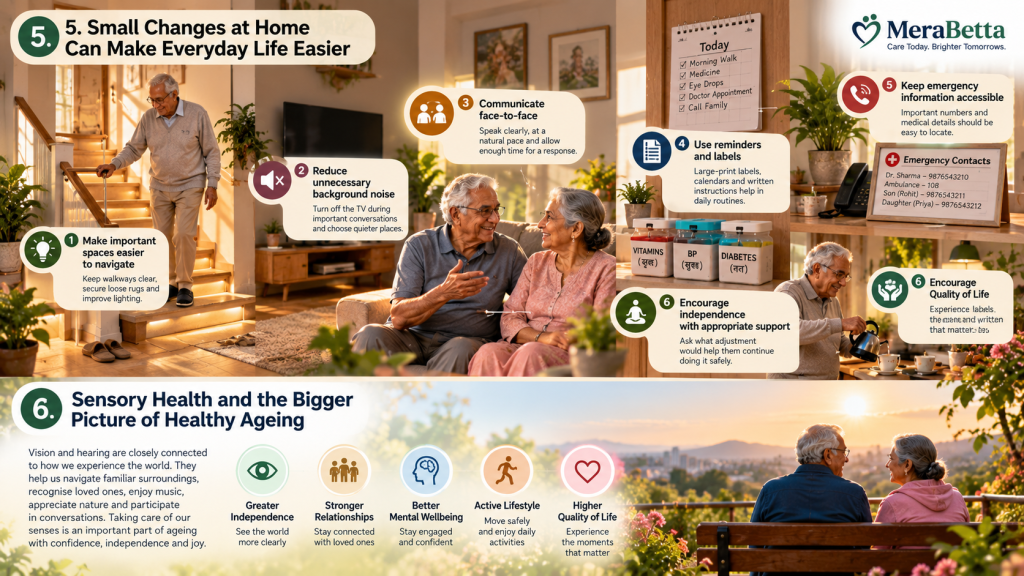
6. Sensory Health and the Bigger Picture of Healthy Ageing
Vision and hearing are closely connected to how we experience the world. They help us navigate familiar surroundings, recognise loved ones, enjoy music, appreciate nature and participate in conversations.
Research has also identified associations between untreated hearing loss, vision difficulties and aspects of cognitive health. However, these relationships are complex, and sensory impairment does not mean that a person will inevitably develop dementia.
The National Institute on Aging emphasises the importance of taking care of sensory health and seeking treatment when difficulties arise. Addressing hearing or vision problems may improve communication, daily functioning and quality of life, even when it cannot eliminate every health risk.
Healthy ageing therefore involves more than managing existing illnesses. It includes identifying changes early, attending appropriate assessments, following treatment recommendations and making everyday environments more supportive.
For families, this means listening without judgement when an older adult describes difficulty seeing or hearing. For older adults, it means recognising that seeking help is a practical step towards maintaining independence—not an admission of defeat.
7. A More Supportive Approach to Ageing
At Merabetta, the vision of elder care centres on making ageing more comfortable, supported and dignified. Sensory health fits naturally into this approach because the ability to see clearly and hear comfortably influences so many parts of daily life.
A pair of properly prescribed spectacles, a hearing assessment, improved lighting or a more thoughtful conversation environment may seem like small interventions. Yet these changes can help an older adult continue reading, meeting friends, attending appointments and enjoying time with family.
Families can contribute by noticing changes, encouraging routine check-ups and helping arrange professional care when needed. Most importantly, they can make sure that older adults remain involved in decisions about their own health and daily lives.

Growing older should not mean gradually withdrawing from the world. When sensory difficulties are recognised and addressed, people have a better opportunity to remain connected to the people, places and experiences they value.
The goal is not to stop ageing. It is to make every stage of life as comfortable, active and fulfilling as possible.
Because the most meaningful part of healthy ageing is not simply seeing more clearly or hearing more accurately. It is continuing to experience the moments that make life worth living.
References
- World Health Organization (WHO) — Deafness and Hearing Loss, updated March 2026.
https://www.who.int/en/news-room/fact-sheets/detail/deafness-and-hearing-loss - World Health Organization (WHO) — Blindness and Vision Impairment, updated February 2026.
https://www.who.int/news-room/fact-sheets/detail/blindness-and-visual-impairment - National Institute on Aging (NIA) — Hearing and Hearing Loss.
https://www.nia.nih.gov/health/hearing-and-hearing-loss - National Eye Institute (NEI) — Helping Older Adults See Well for a Lifetime.
https://www.nei.nih.gov/sites/default/files/2023-02/Helping_Older_Adults_See_Well_For_A_Lifetime.pdf - National Institute on Aging (NIA) — Take Care of Your Senses: The Science Behind Sensory Loss and Dementia Risk.
https://www.nia.nih.gov/news/take-care-your-senses-science-behind-sensory-loss-and-dementia-risk