

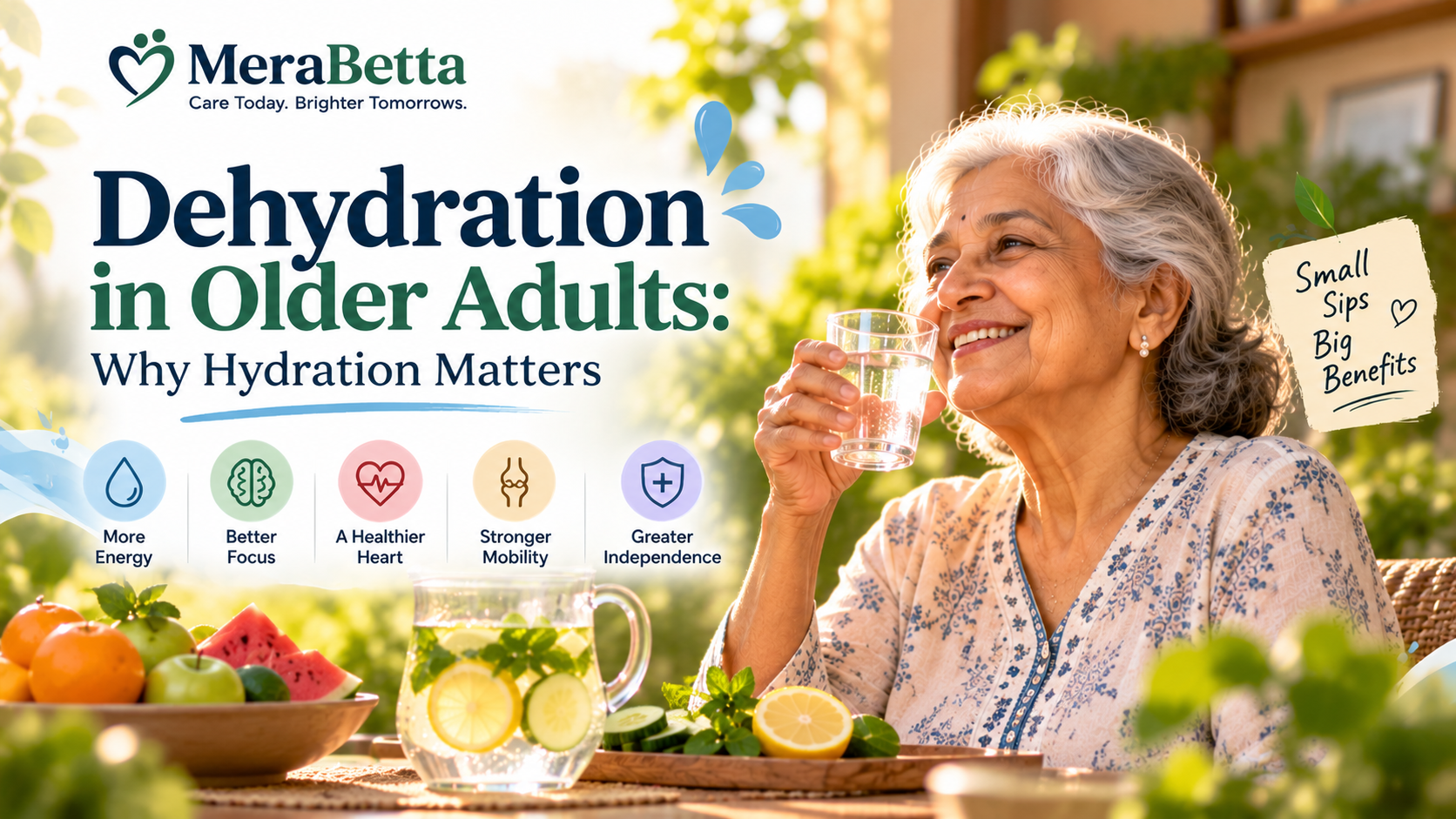
Small Sips, Stronger Days: The Importance of Staying Hydrated After 60
“जल ही जीवन है” — Water is life. And as we grow older, every sip becomes an important part of caring for our health.
Imagine starting your morning with a cup of tea, enjoying breakfast, reading the newspaper and getting ready for the day. Everything feels normal. But somewhere between these familiar activities, you may have forgotten something simple: drinking enough water.
For many older adults, this happens more often than they realise. They may not feel particularly thirsty, may avoid drinking water because of frequent bathroom visits, or may simply forget to drink throughout the day.
Hydration is often overlooked because it seems like such a basic part of everyday life. However, water supports almost every important function in the body, from regulating temperature and supporting digestion to helping the kidneys remove waste.
As we age, our sense of thirst may become less reliable, making it easier to develop dehydration without noticing the early warning signs. According to MedlinePlus, older adults are among the groups at greater risk because they may not recognise thirst as easily as younger people.
Let’s understand why hydration deserves more attention after 60 and how a few simple habits can make a meaningful difference.
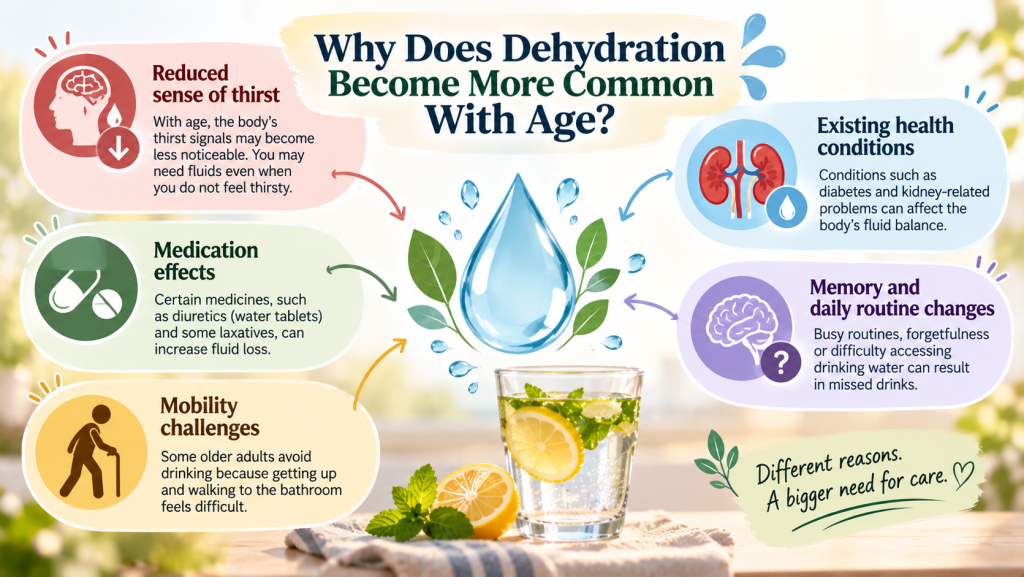
1. Why Does Dehydration Become More Common With Age?
Dehydration occurs when the body loses more fluids than it takes in. This can happen because of inadequate fluid intake, excessive sweating, fever, vomiting, diarrhoea or certain medications.
But why are older adults particularly vulnerable?
There are several reasons:
- Reduced sense of thirst: With age, the body’s thirst signals may become less noticeable. A person may need fluids even when they do not feel thirsty.
- Medication effects: Certain medicines, including diuretics (water tablets) and some laxatives, can increase fluid loss.
- Mobility challenges: Some older adults avoid drinking because getting up and walking to the bathroom feels difficult.
- Existing health conditions: Diabetes and kidney-related conditions can affect the body’s fluid balance.
- Memory and daily routine changes: Busy routines, forgetfulness or difficulty accessing drinking water can result in missed drinks.
These factors can combine, making dehydration a concern even during ordinary days at home.
2. The Warning Signs: What Your Body May Be Telling You
One of the biggest challenges with dehydration is that its early signs can be mistaken for normal tiredness or changes associated with ageing.
For example, an older adult who feels unusually weak may assume they simply need rest. Someone experiencing a headache may attribute it to poor sleep.
However, these symptoms may sometimes indicate inadequate fluid intake.
Watch for these possible warning signs:
- Dry mouth and lips: The mouth may feel sticky or unusually dry.
- Dark-coloured urine: Urine may become darker than usual when the body is conserving water.
- Dizziness or light-headedness: Especially when standing up.
- Unusual tiredness: A person may feel weak or less energetic than usual.
- Headaches: Insufficient fluid intake can contribute to headaches.
- Constipation: Inadequate fluid intake can make stools harder and more difficult to pass.
- Reduced urination: Passing urine less frequently than usual may be another warning sign.
These symptoms do not always mean dehydration, and urine colour alone cannot diagnose it. Persistent or unusual symptoms should be discussed with a healthcare professional.
Important: Sudden confusion, fainting, very little or no urination, rapid heartbeat or rapid breathing can indicate severe dehydration or another serious medical problem. Seek urgent medical attention rather than trying to manage these symptoms at home.
3. Why Water Matters Beyond Quenching Thirst
Water does much more than simply relieve thirst. It helps the body carry out essential everyday functions.
Here are five reasons hydration matters as we grow older:
- Supports digestion: Fluids help maintain normal bowel function and can help prevent constipation.
- Supports kidney function: The kidneys use water to remove waste from the bloodstream through urine.
- Helps regulate body temperature: Fluids support the body’s natural cooling process, particularly in warm weather.
- Supports circulation: Blood contains a large amount of water, which helps maintain normal circulation.
- Supports physical and mental functioning: Dehydration can contribute to tiredness, headaches and difficulty concentrating.
Adequate hydration supports these normal functions, although drinking extra water is not a cure for chronic illnesses or a guarantee of better health.
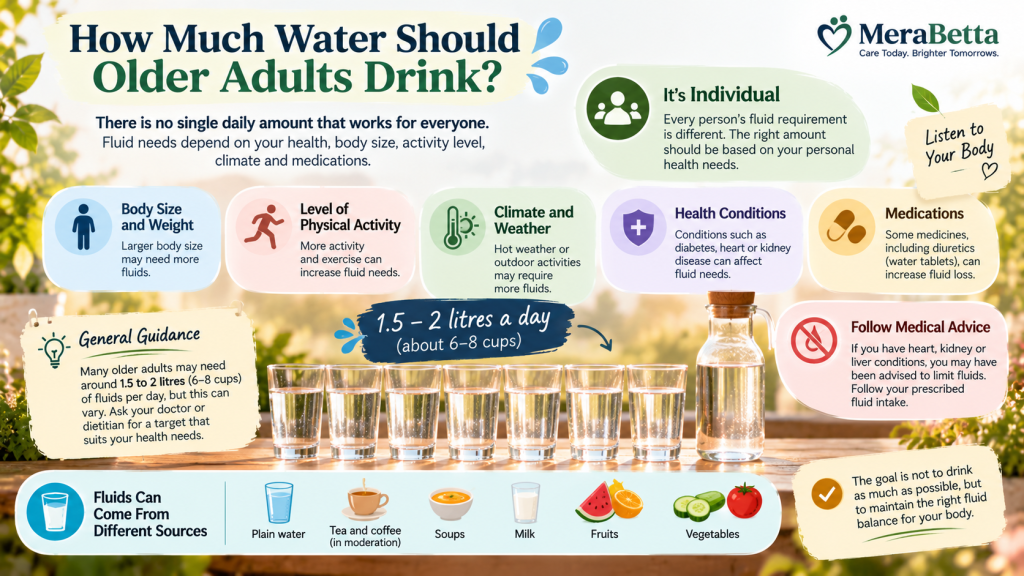
4. How Much Water Should Older Adults Drink?
This is one of the most common questions about hydration.
There is no single daily water target that is suitable for every older adult. Fluid requirements depend on factors such as body size, activity, climate, health conditions and medications.
A person living in a hot climate may need to pay particular attention to fluid intake, especially during outdoor activities or periods of excessive sweating.
Rather than following a random internet recommendation, older adults should ask their doctor or registered dietitian about an appropriate daily fluid target.
A special note for people with medical conditions: Those living with certain heart, kidney or liver conditions may have been advised to restrict fluids. They should follow their prescribed fluid limits instead of increasing water intake without medical guidance.
The goal is not to drink as much water as possible. It is to maintain the right fluid balance for your body.
5. Six Simple Ways to Stay Hydrated Every Day
Staying hydrated does not have to feel like another difficult health responsibility. Small changes in everyday routines can make drinking fluids easier and more enjoyable.
1. Start your morning with water.
Keep a glass of water near your breakfast area. Having a drink after waking up can help establish a regular hydration habit.
2. Make drinking water part of your routine.
Instead of waiting until you feel thirsty, include drinks at regular points throughout the day, such as with breakfast, lunch and evening snacks.
3. Keep water within easy reach.
Place a clean, lightweight water bottle or jug somewhere accessible. For people with mobility challenges, keeping water nearby can make a real difference.
4. Add variety to your fluids.
Plain water is an excellent choice, but other suitable options may include milk, soups and unsweetened drinks. Choose options that fit your dietary and medical needs.
5. Include water-rich foods.
Fruits and vegetables can contribute to daily fluid intake. Cucumber, watermelon, oranges, tomatoes and muskmelon are examples of foods with high water content.
6. Pay extra attention during hot weather.
In warmer months, fluid needs may increase because of sweating. Keep drinking opportunities available throughout the day, particularly during outdoor activities.
Remember, these habits should be adjusted if a healthcare professional has prescribed a fluid restriction.
6. Hydration Can Be Enjoyable: Make Every Sip Count
For some older adults, drinking plain water throughout the day can become repetitive. A little creativity can make hydration more enjoyable.
Here are a few simple ideas:
- Cucumber and mint water: Add a few cucumber slices and fresh mint leaves to a jug of water.
- Lemon-infused water: Add a slice of lemon for a refreshing flavour, if suitable for your dietary needs.
- Seasonal fruit: Enjoy water-rich fruits such as watermelon, oranges and muskmelon.
- Homemade vegetable soup: A suitable soup can provide both fluids and nourishment.
- Buttermilk: Unsalted or lightly seasoned buttermilk can be an option for those who tolerate dairy and do not have dietary restrictions.
These choices can add variety, but they should not replace prescribed medical nutrition plans. Avoid adding excessive sugar or salt simply to make drinks more appealing.
The best hydration routine is one that is safe, practical and enjoyable.
7. How Families Can Help Older Adults Stay Hydrated
Hydration is not just an individual responsibility. Families and caregivers can play an important role in helping older adults maintain healthy drinking habits.
Sometimes, the most meaningful support comes from small gestures.
- Offer water regularly: Gently remind parents or grandparents to drink throughout the day.
- Make water accessible: Keep drinking water, glasses and bottles within comfortable reach.
- Notice changes: Pay attention to unusual tiredness, dizziness, reduced urination or changes in behaviour.
- Respect personal preferences: Some people prefer warm water, while others enjoy room-temperature drinks.
- Make hydration social: Enjoying a glass of water or a bowl of soup together can turn hydration into a pleasant family routine.
- Discuss concerns with a doctor: If an older adult repeatedly avoids fluids, has difficulty swallowing or experiences frequent dehydration, seek professional advice.
Most importantly, avoid forcing someone to drink beyond their prescribed fluid limit. Support should always consider the person’s medical needs and comfort.
8. A Small Habit That Supports a Healthier Tomorrow
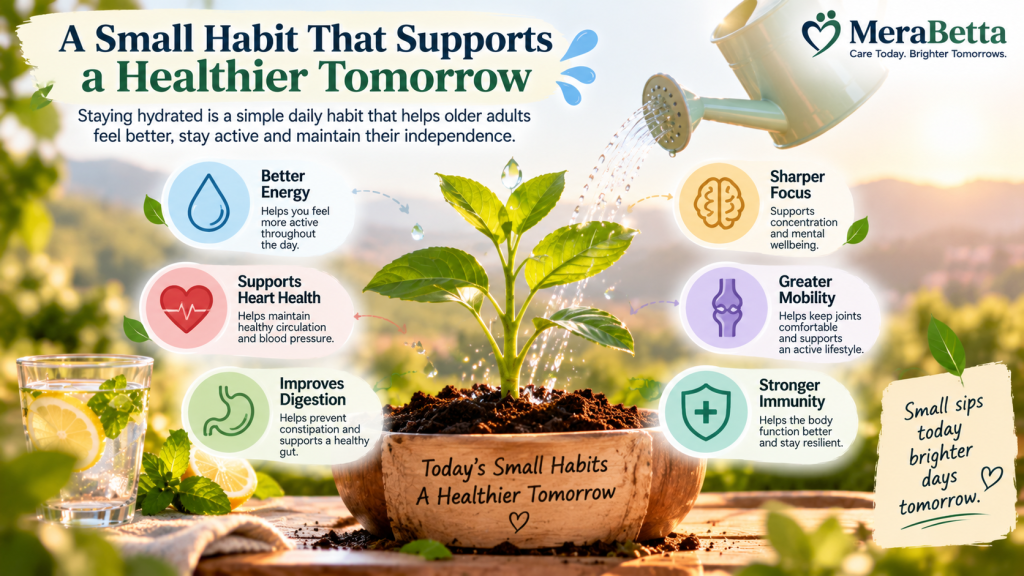
Healthy ageing is not always about making dramatic lifestyle changes. Sometimes, it begins with the simplest habits: eating balanced meals, staying physically active, taking medicines as prescribed and drinking enough fluids.
Hydration may seem like a small part of daily life, but overlooking it can create avoidable health difficulties, particularly for older adults.
The next time you visit your parents or grandparents, take a moment to check whether they have drinking water nearby. Encourage them to follow a hydration routine that suits their health needs. A simple glass of water offered with care can be a thoughtful reminder that their wellbeing matters.
At MeraBetta, we believe that ageing should be supported with comfort, dignity and independence. Because caring for older adults is not only about responding when something goes wrong; it is also about encouraging the everyday habits that help them live with confidence.
Small sips. Thoughtful habits. Better-supported ageing.
Care Today. Brighter Tomorrows.
References
- MedlinePlus – Dehydration: https://medlineplus.gov/dehydration.html
- National Institutes of Health (NIH) – Hydrating for Health: https://newsinhealth.nih.gov/2023/05/hydrating-health
- National Kidney Foundation – Healthy Hydration and Your Kidneys: https://www.kidney.org/kidney-topics/healthy-hydration-and-your-kidneys
- Healthdirect Australia – Healthy Eating Over 60: https://www.healthdirect.gov.au/healthy-living/food-and-nutrition/healthy-eating-over-60
- U.S. Department of Veterans Affairs – Preventing Dehydration in Older Adults: https://www.nutrition.va.gov/NUTRITION/docs/UpdatedPatientEd/PreventingDehydrationInOlderAdultsOct2022.pdf
NOTE:- Health information in this article is for general educational purposes and is not a substitute for individual medical advice. Older adults with chronic health conditions or prescribed fluid restrictions should consult their healthcare professional about their hydration needs.