

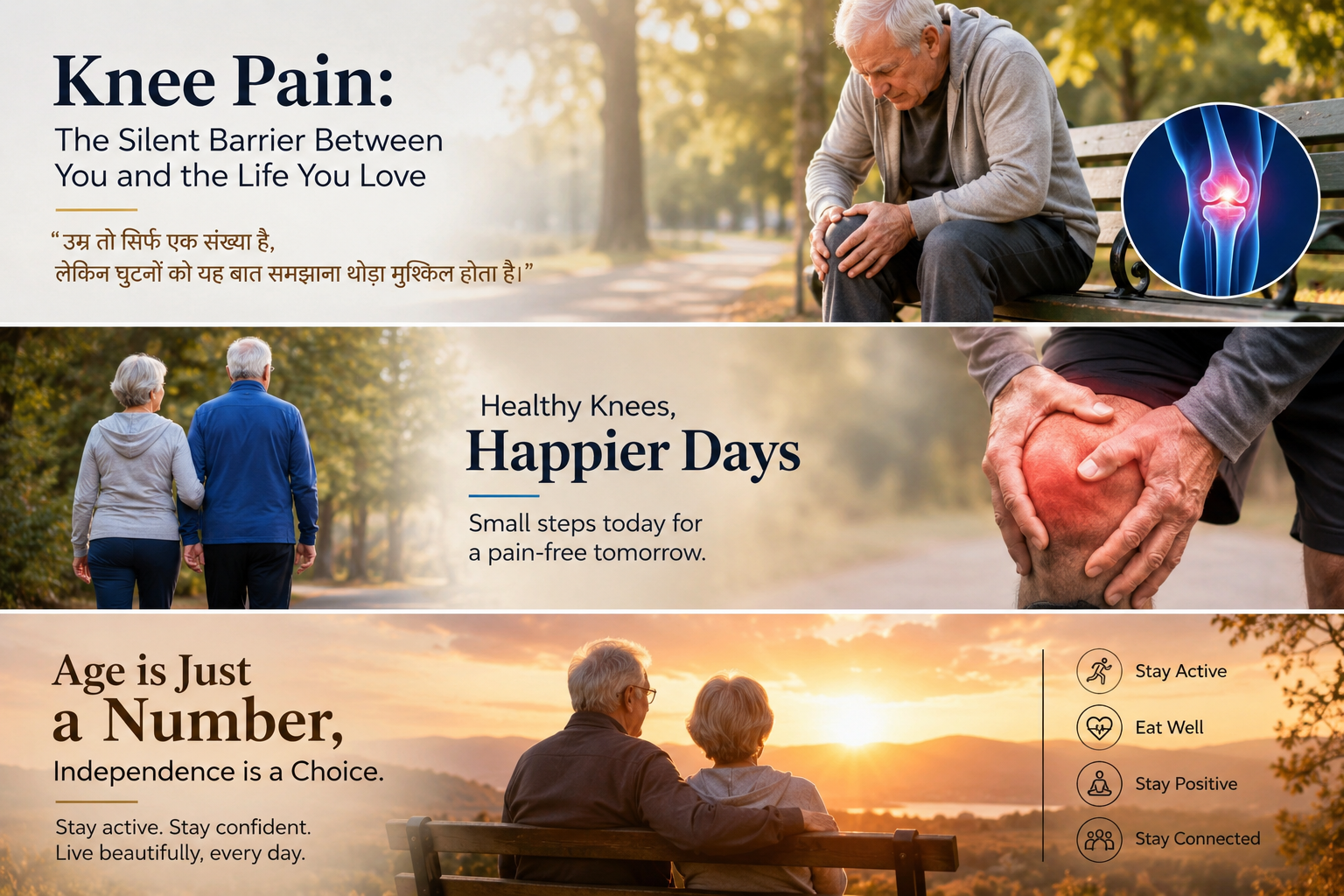
“उम्र तो सिर्फ़ एक संख्या है, लेकिन घुटनों को यह बात समझाना थोड़ा मुश्किल होता है।”
There is a saying in many Indian households: “जब घुटने जवाब देने लगते हैं, तब उम्र का एहसास होने लगता है।” While growing older brings wisdom, experience, and countless memories, it also brings certain physical challenges that quietly become a part of daily life. Among them, knee pain is perhaps one of the most common and frustrating struggles faced by people above the age of 65.
For many seniors, knee pain does not arrive suddenly. It creeps in gradually. At first, it is a slight discomfort while climbing stairs. Then comes stiffness after waking up in the morning. Over time, activities that once felt effortless—walking in the park, visiting the local market, attending family gatherings, or even standing for long periods begin to feel like obstacles rather than simple routines.
A few weeks ago, I met Mr. XYZ, a retired professional in his early seventies. As we sat together over a cup of tea, our conversation naturally drifted toward health, aging, and daily life.
Me: Good morning, Uncle. How have you been?
*Sharma: I’m doing well, beta, but these knees have started running their own government.
Me: Still troubling you?
*Sharma : Every day. Some mornings I sit on the edge of my bed for five minutes before standing up. Not because I don’t want to get up, but because my knees need time to agree.
Me: Does it affect your daily routine?
*Sharma : More than people realize. Earlier, I would walk to the nearby park every evening. Now I keep calculating whether the walk is worth the pain that follows.
Me: Have you reduced your activities because of it?
*Sharma : Unfortunately, yes. Weddings, social gatherings, even family outings I sometimes avoid them because I know there will be too much standing or walking involved.
Me: What bothers you most—the pain itself?
*Sharma : The pain is manageable. What hurts more is feeling less independent than before.
Me: Do your family members help?
*Sharma : They do, and I am grateful. But after spending a lifetime taking care of others, it is difficult to suddenly become the one asking for help.
His words stayed with me long after the conversation ended. What struck me was that he wasn’t simply talking about aching joints. He was talking about freedom, confidence, and independence things that every person values deeply, regardless of age.
The reality is that knee pain affects millions of seniors across India. Yet it is often dismissed as a “normal part of aging.” While certain age-related changes are natural, persistent knee pain should never be accepted as something one must simply endure. Understanding its causes and taking proactive steps can significantly improve both mobility and quality of life.
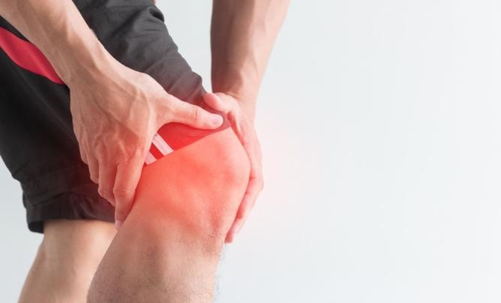
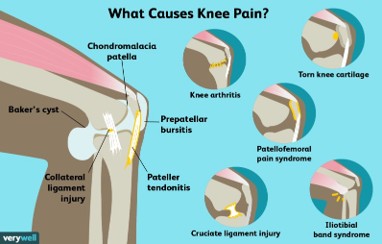
As we age, the protective cartilage within the knee joint gradually wears down. Decades of walking, climbing stairs, carrying responsibilities, and staying active leave their mark on the body. Conditions such as osteoarthritis become increasingly common after the age of 65, causing pain, stiffness, and reduced flexibility. In addition, weakening muscles, old injuries, excess weight, and a sedentary lifestyle can all contribute to increasing discomfort.
What many people fail to recognize is that knee pain rarely remains a physical issue alone. It often creates a chain reaction that impacts emotional well-being. Seniors who experience discomfort while walking may begin staying indoors more often. Social interactions become less frequent, hobbies are postponed, and physical activity decreases. Over time, this can lead to feelings of isolation, frustration, and a loss of confidence.
This is precisely why healthy aging requires a broader perspective. In our discussion about the Third Innings Blueprint, we explored how life after 55 can become a phase of renewed purpose and vitality. Maintaining mobility is one of the most important foundations of that vision. The ability to move comfortably enables seniors to remain socially connected, physically active, and emotionally fulfilled.
Managing knee pain often begins with small but consistent lifestyle choices. Gentle daily movement, stretching exercises, weight management, proper nutrition, and regular health assessments can all contribute significantly to joint health. Contrary to popular belief complete rest is rarely the answer. Movement, when guided appropriately, helps strengthen the muscles surrounding the knee and supports long-term mobility.
Equally important is creating an environment where seniors feel supported rather than limited. This connects closely with the idea discussed in The Art of Comfort, where true care goes beyond medical assistance. Comfort is not simply the absence of pain; it is the confidence of knowing that support is available when needed, while still maintaining one’s dignity and independence.
This is where modern elder-care services are changing the experience of aging. Today’s seniors are seeking solutions that allow them to continue living life on their own terms while receiving personalized support tailored to their needs.
What Does Research Say?
Knee pain is one of the most common health challenges faced by older adults worldwide. A landmark global study published in The Lancet (2020) by researchers A. Cui et al. analyzed data from over 10 million individuals and found that knee osteoarthritis affects nearly 23% of adults aged 40 years and above, with prevalence increasing significantly as people age. The study also observed that the burden of knee osteoarthritis is highest among individuals aged 70–79 years.
Closer to home, a 2025 systematic review and meta-analysis conducted in India examined 14 community-based studies involving more than 5,000 elderly participants. The researchers found that approximately 47% of Indians aged 60 years and above suffer from knee osteoarthritis, highlighting the growing need for better mobility support, rehabilitation services, and preventive care for seniors.( Published in The Lancet Rheumatology, 2020.)
At Merabetta, we believe that aging should never mean giving up the activities that bring joy and meaning to life. Whether it is assistance with healthcare management, wellness monitoring, companionship, or personalized elder-care support, our focus is on helping seniors maintain their independence while ensuring they never feel alone in their journey. We understand that behind every health concern is a person with dreams, relationships, routines, and aspirations that deserve to be protected.
Knee pain may be common after the age of 65, but it should never define a person’s identity or future. Every senior deserves the opportunity to continue exploring, connecting, celebrating, and living with confidence. With the right care, awareness, and support, the golden years can remain exactly that—golden.
Because growing older is not about counting the years behind us. It is about making every step ahead as comfortable, meaningful, and fulfilling as possible.
“बुढ़ापा अपने आप नहीं आता, अपने साथ कई कहानियाँ लेकर आता है।”