

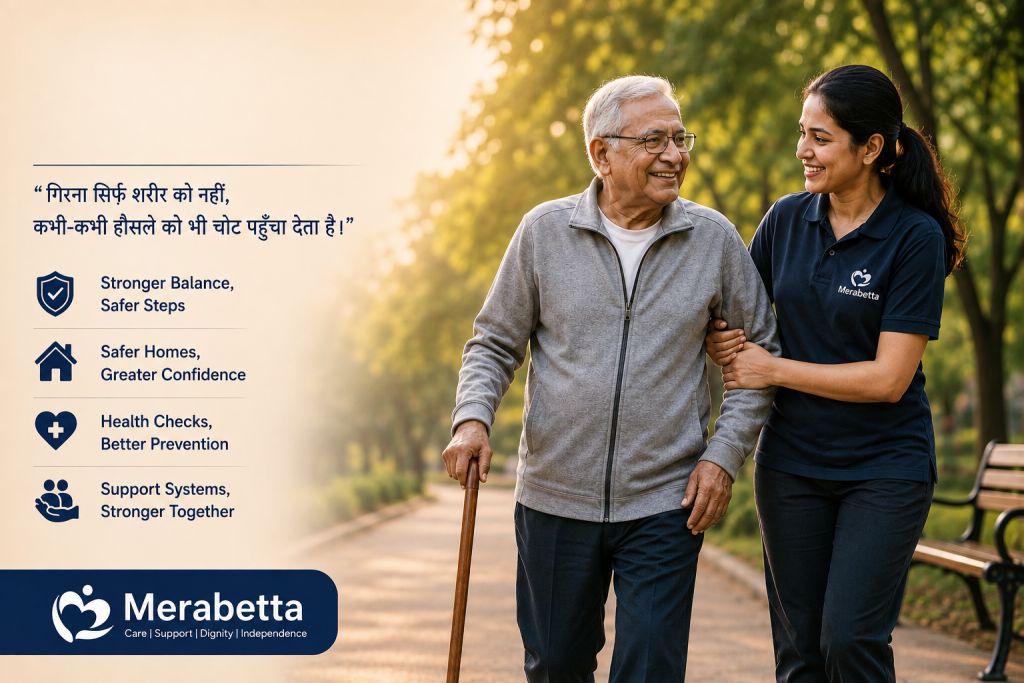
“गिरना सिर्फ़ शरीर को नहीं, कभी-कभी हौसले को भी चोट पहुँचा देता है।”
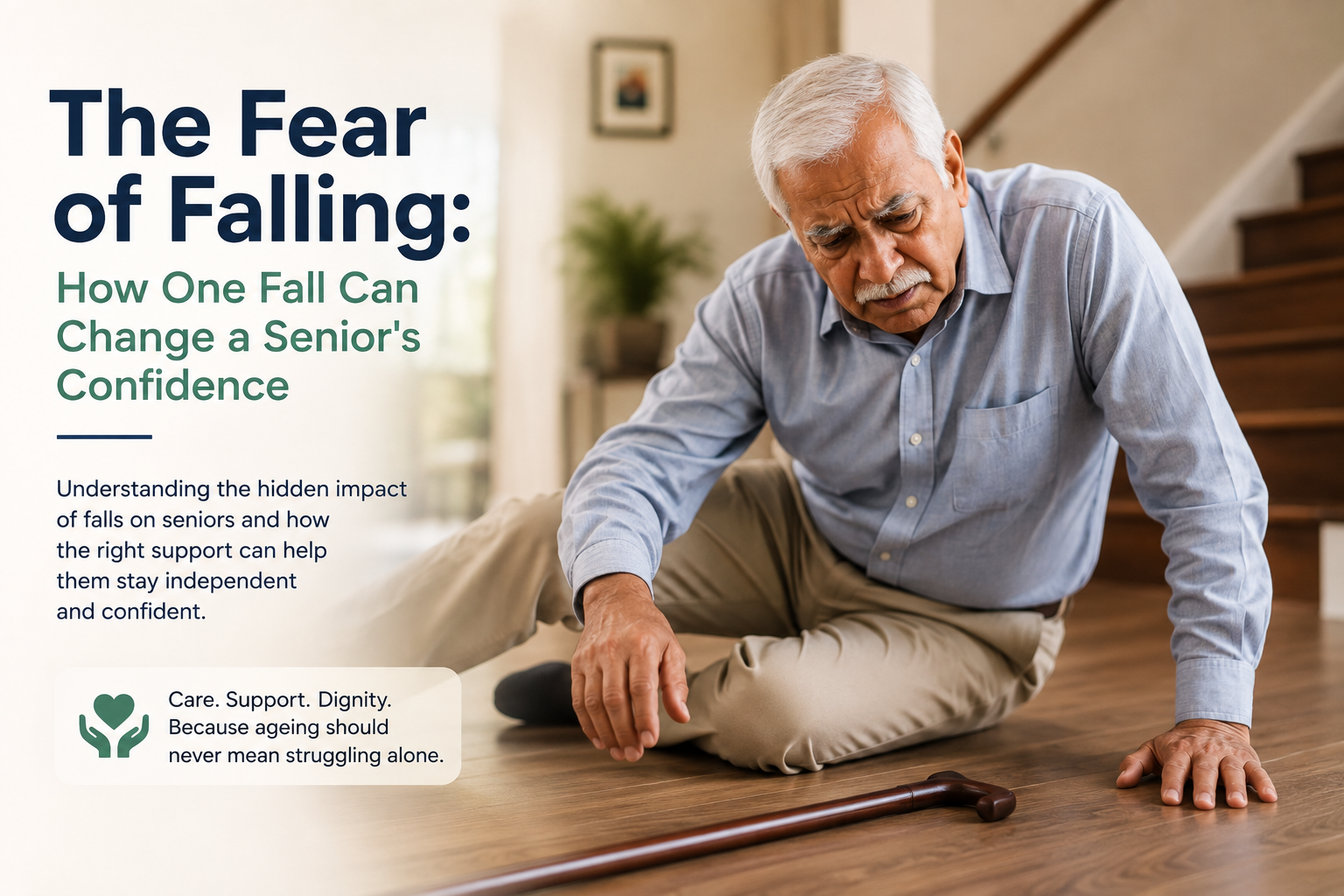
For many of us, falling is something we associate with a moment of embarrassment—a stumble, a bruise, perhaps a few days of discomfort before life returns to normal. But after the age of 65, a fall can mean something much more profound. It can change the way a person walks, the way they use their home, the places they visit, and most importantly, the way they feel about their own independence.
The physical injury may heal with time. The fear of falling again can remain much longer.
A senior who once enjoyed an evening walk may start avoiding the park. Someone who regularly climbed stairs may begin waiting for assistance. A person who loved visiting friends, shopping independently, or attending family gatherings may gradually choose to stay home. What begins as a sensible precaution can slowly turn into a restriction on everyday life.
This is why falls among older adults deserve to be viewed as more than an accident. They are a health, mobility, and confidence issue.
When Fear Becomes a Barrier
The fear of falling is surprisingly common among older adults, particularly among those who have experienced a previous fall. And it is understandable. After an unexpected fall, every uneven surface, staircase, wet bathroom floor, or crowded pathway can suddenly appear threatening.
The natural reaction is often to move less.
Unfortunately, avoiding movement can create another problem. Reduced physical activity can lead to weaker muscles, poorer balance, reduced flexibility, and lower confidence. These changes can make everyday movement more difficult and may increase vulnerability to future falls.
In other words, fear can become part of a cycle:
Fall → Fear → Less Movement → Reduced Strength and Confidence → Greater Risk
Breaking this cycle requires more than simply telling a senior to “be careful.” It requires creating an environment and routine in which they feel safe enough to move again.
What Does Research Tell Us?
Falls are one of the leading causes of injury among older adults. According to the U.S. Centers for Disease Control and Prevention (CDC), more than one in four adults aged 65 and older reports falling each year. The CDC also highlights that falls can result in serious injuries and can cause older adults to become afraid of falling again, potentially leading to reduced activity and loss of independence.
A review published by Ann Dellinger in Current Trauma Reports in 2017 reported that approximately 28.7% of adults aged 65 and above experience a fall each year. The review also emphasized that fall prevention can involve multiple approaches, including exercise, medication review, vision care, and improvements to the home environment.
These findings make one thing clear: falls are common, but their consequences do not have to become a permanent part of aging.
Why Balance and Muscle Strength Matter
As we grow older, maintaining muscle strength and balance becomes increasingly important. The muscles surrounding the hips and legs play a major role in stability, while good balance helps the body respond when it encounters an unexpected change in surface or direction.
This does not mean seniors need intense gym workouts. Depending on an individual’s health and mobility, activities such as walking, gentle strength exercises, balance training, stretching, yoga, or physiotherapy may be appropriate.
However, exercise should be personalized. A senior recovering from an injury or living with a medical condition should consult an appropriate healthcare professional before beginning a new exercise programme.
The objective is not to chase fitness records.
It is to maintain the strength and confidence required for everyday life—standing up from a chair, walking to the kitchen, climbing a few steps, getting out of bed, or enjoying a walk in the park.
Look Around the Home
For many seniors, fall prevention begins not in a hospital or gym, but at home.
A loose rug in the hallway, poor lighting near the staircase, a wet bathroom floor, electrical wires across a walking path, or frequently used objects placed too high can create unnecessary hazards.
Small modifications can make a meaningful difference. Keeping pathways clear, improving lighting, installing secure handrails where necessary, using appropriate bathroom safety equipment, and placing everyday items within comfortable reach can help make the home more senior-friendly.
The aim is not to turn a home into a medical facility.
It is to create an environment where a senior can move around with greater confidence.
Medication and Vision Matter Too
Falls do not always have a single cause. Several factors can contribute to instability, including medication side effects, vision problems, dizziness, weakness, unsuitable footwear, and environmental hazards.
This is why regular health assessments are important, particularly for seniors who have already experienced a fall.
Certain medications can cause dizziness or drowsiness in some individuals. Regular medication reviews with a healthcare professional can help identify potential concerns. Similarly, vision checks can help address problems that may make obstacles or changes in flooring difficult to see.
Fall prevention is therefore not one single solution.
It is a combination of healthcare, movement, awareness, and a safer environment.
Independence Does Not Mean Doing Everything Alone
There is an important difference between independence and isolation.
Being independent does not necessarily mean refusing help. It means being able to participate in decisions, maintain control over one’s routine, and continue doing the things that bring meaning to life.
Sometimes, the most empowering form of care is knowing that assistance is available when it is needed.
This philosophy closely connects with Merabetta’s approach to elder care. Merabetta describes its vision around helping seniors age with dignity and independence, while providing a trusted support system that brings together healthcare, technology, products, services, and human support.
For families, this can provide reassurance that their loved ones have access to support beyond occasional phone calls or emergency situations. For seniors, it can mean receiving assistance without feeling that they have lost control over their own lives.
When Families Live Far Away
Today, it is common for adult children to live in different cities or even different countries from their parents. The distance may not reduce their concern, but it can make everyday support difficult.
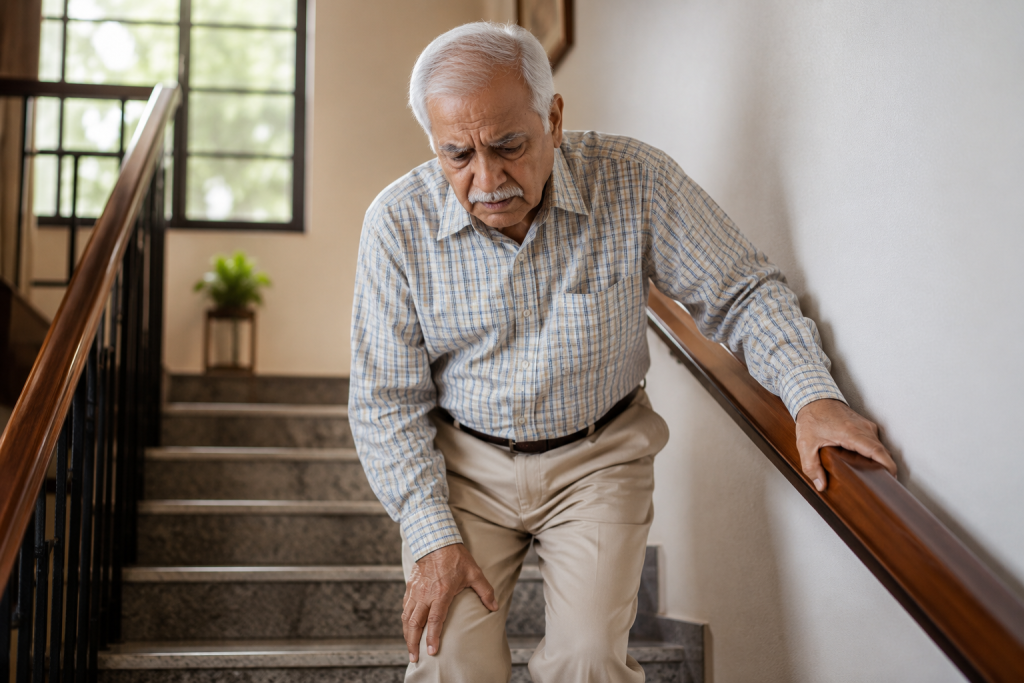
A phone call can check how someone is feeling, but it cannot always tell you whether your parent is struggling to climb the stairs, becoming hesitant about walking, or quietly avoiding activities because they are afraid of falling.
This is where a dependable elder-care ecosystem can make a difference.
The goal is not to replace family involvement. It is to strengthen it—so that seniors can receive appropriate support even when their children cannot be physically present every day.
Rebuilding Confidence One Step at a Time
Recovering from a fall is not simply about waiting for an injury to heal. It is also about gradually rebuilding trust in one’s own body.
For some seniors, that may mean starting with short, supervised walks. For others, it may involve physiotherapy, balance exercises, home modifications, or simply having a trusted person nearby while they regain confidence.
Progress may be slow.
That is okay.
The important thing is to avoid allowing one frightening experience to permanently shrink someone’s world.
A senior should not have to stop visiting friends because of fear. They should not have to give up their favourite hobbies because they are afraid of walking. And they should not feel that asking for support means giving up their independence.
Aging Should Not Mean Living in Fear
Growing older naturally brings changes, but it should not mean living every day afraid of what might happen next.
Falls can be prevented or their risk reduced through appropriate exercise, health assessments, safer surroundings, medication reviews, and awareness. Just as importantly, seniors need emotional reassurance and encouragement to remain active within their abilities.
At Merabetta, the philosophy is simple: aging should never mean struggling alone. Its approach is built around making senior care more accessible while supporting comfort, dignity, independence, and peace of mind.
Because sometimes the most important thing we can give an older adult is not another instruction to “be careful.”
It is the confidence to take the next step.
One step toward the park.
One step toward independence.
One step toward living fully again.
And sometimes, that one step is where confidence begins.