

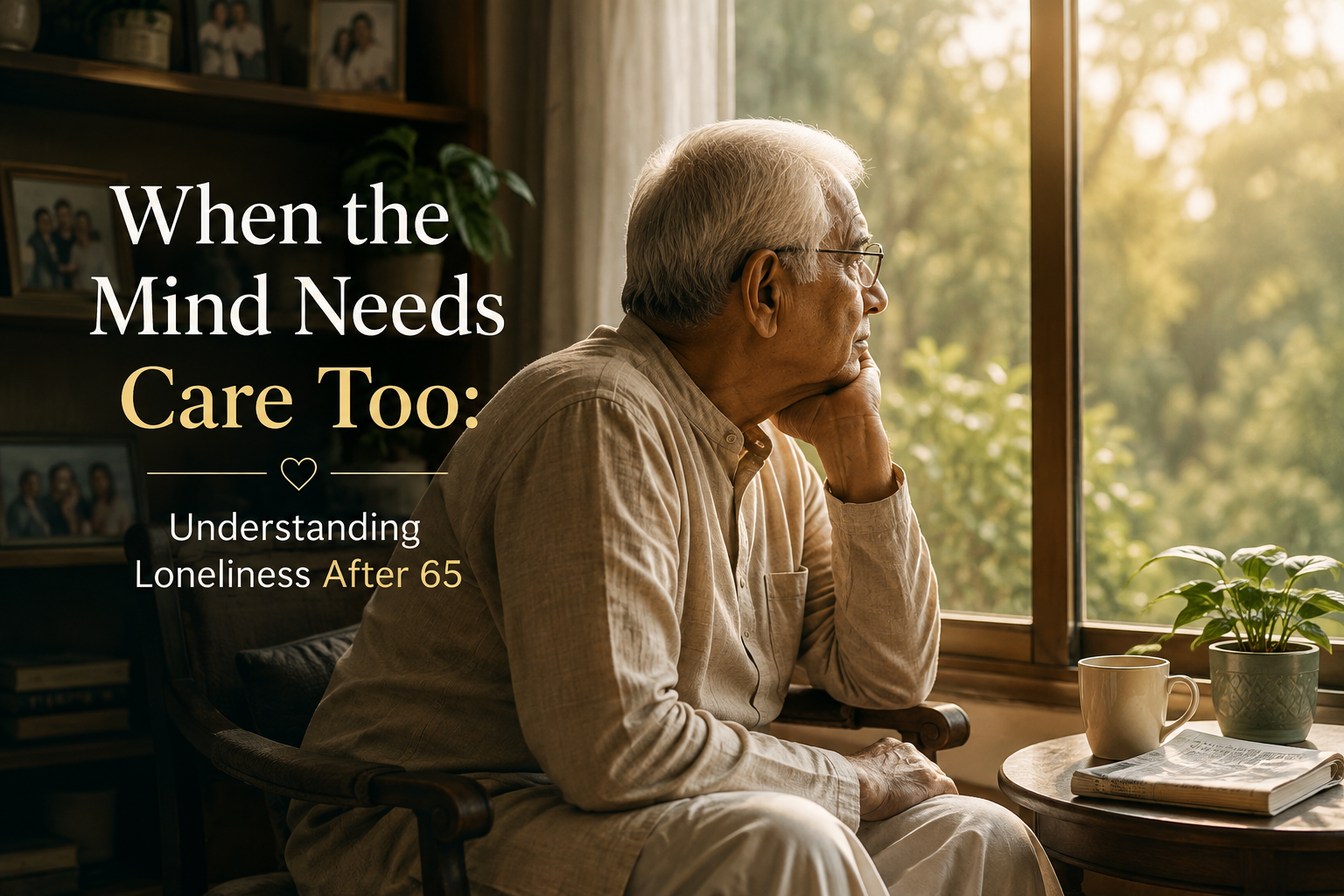
“भीड़ में रहना और किसी का अपना होना, दोनों अलग बातें हैं।”
There is a quiet kind of loneliness that does not always look like loneliness. It can exist in a house filled with people, during a family dinner, or even in the middle of a busy neighbourhood. For many people above 65, loneliness does not necessarily mean having nobody around them. Sometimes, it means having nobody to talk to about the little things the morning newspaper, an old memory, a favourite television programme, the pain in their knees, or simply how the day went.
Growing older brings wisdom, experience and countless memories, but it can also bring changes that are difficult to talk about. Retirement may bring an end to years of professional interaction. Children may move to different cities or countries. Friends may become less accessible. Physical limitations can make stepping outside the house more difficult. Gradually, a person’s world can become smaller without anyone noticing.
And that is when the mind needs care too.
“I’m Not Alone, But I Still Feel Lonely.”
A few days ago, imagine sitting across from *Varma Ji, a 70-year-old retired teacher, during his evening tea. He has children who love him, grandchildren who call him regularly, and neighbours who greet him every morning. Yet, when asked how he spends his day, his answer reveals something deeper.
Me: Uncle, how was your day today?
Mr. Varma : It was fine, beta. Nothing much happened.
Me: Didn’t you speak to anyone?
Mr. Varma : My son called in the morning. We spoke for five minutes. Then he had to get back to work.
Me: And after that?
Mr.Varma : I watched television for some time. Then I had lunch and slept.
Me: Don’t you go out for your evening walk anymore?
Mr. Varma : I used to. Now my friends don’t come regularly, and going alone doesn’t feel the same.
Me: But you have your family around you, right?
Mr. Varma : Yes, they care for me. I know that. But everyone has their own life.
Me: Does that make you feel lonely?
Mr. Varma : Sometimes. I don’t want my children to worry, so I don’t tell them.
Me: What do you miss the most?
Mr. Varma : Conversations. Not important conversations. Just normal ones.
His answer is simple, but it captures something many seniors experience silently. Loneliness is not always about being physically alone. It can be about feeling emotionally disconnected, unheard, or less involved in the world around you.
Why Loneliness Becomes More Common After 65
The years after 65 can bring several changes at once. Retirement changes daily routines, while children may move away for work or personal responsibilities. Social circles can become smaller as friends relocate, develop health problems, or simply become less active. At the same time, difficulties with hearing, vision, mobility or transportation may discourage seniors from attending social events.
For someone who has spent decades surrounded by colleagues, family responsibilities and a predictable routine, suddenly having long stretches of unstructured time can be emotionally challenging.
This does not mean that every senior experiences loneliness, nor does being alone automatically mean someone is lonely. Some people genuinely enjoy solitude and find great satisfaction in reading, gardening, prayer, hobbies or spending time with themselves. The concern arises when solitude becomes unwanted isolation—when a person wants connection but feels unable to find it.
That distinction matters.
Loneliness Is More Than an Emotional Feeling
Loneliness deserves attention because our mental and physical wellbeing are closely connected. The World Health Organization has identified social isolation and loneliness as important public-health concerns, particularly because prolonged loneliness can negatively affect health and quality of life.
For older adults, persistent loneliness may be associated with depression, anxiety, reduced physical activity and poorer overall wellbeing. It can also influence everyday habits. A senior who stops going outside may move less. Someone who feels disconnected may lose interest in hobbies or social activities. Over time, this can create a cycle in which reduced activity leads to even greater isolation.
That is why caring for an older adult should never mean focusing only on medicines, medical appointments and physical symptoms.
The mind needs attention too.
The Small Things That Can Make a Big Difference
The solution to loneliness does not always have to be complicated. Sometimes, it begins with something remarkably simple—a regular phone call, an evening walk, a conversation over tea, or an invitation to participate in a family activity.
Encouraging seniors to maintain a daily routine can provide a sense of purpose. Reading, gardening, music, cooking, religious or cultural activities, learning something new, or participating in community events can help create meaningful structure in the day.
Technology can also help bridge distance. Video calls can allow grandparents to see their grandchildren even when they live thousands of kilometres away. However, technology should be a bridge to human connection, not a replacement for it.
Most importantly, families should ask questions and actually listen to the answers.
Instead of asking only, “Did you take your medicine?”, sometimes ask, “How are you feeling today?”
Instead of asking, “Do you need anything?”, try asking, “What would make your day better?”
These small differences can make an older person feel seen rather than simply looked after.
Independence and Connection Can Exist Together
One of the most important lessons of healthy aging is that support should not automatically mean taking away independence.
A senior may need assistance with healthcare, mobility or daily essentials while still wanting to make their own decisions, maintain their routines and remain involved in family life.
This idea connects closely with the philosophy behind Merabetta. The company describes its mission as simplifying and strengthening aging while bringing together products, services, technology and human support to help elders live with greater dignity and independence.
Its senior-focused healthcare platform provides medical essentials, wellness products and daily-care solutions designed around senior needs, with an emphasis on trusted quality, verified suppliers and convenient doorstep delivery.
For families, this kind of support can mean one less complicated healthcare task to manage. For seniors, it can mean greater convenience without having to compromise their sense of independence.
When Families Live Far Away
Modern families often live across cities and countries. A son may be working in Bengaluru, a daughter may be living in Dubai, while their parents continue to live in their hometown.
Distance does not mean a lack of love.
But distance can make everyday care more difficult.
This is where reliable systems and thoughtful healthcare support become valuable. Families should not have to wait for an emergency before thinking about their parents’ wellbeing. Regular communication, preventive health awareness, access to essential products and a dependable support system can make aging at home more comfortable and reassuring.
For seniors, the greatest comfort may simply be knowing that someone has thought ahead.
“Merabetta Hai Na” — The Reassurance Behind Care
Merabetta’s story itself comes from a phrase familiar to many Indian families: “Mera Betta Hai Na.” It represents reassurance—the feeling that there is someone beside you when things become difficult. The company’s stated vision is to create a broader ecosystem around aging that combines health, technology, wisdom and compassion.
That philosophy is particularly meaningful when we talk about loneliness.
Because care is not only about what we give someone.
Sometimes, care is about making them feel that they still belong.
A senior does not need to be constantly entertained or surrounded by people. They need meaningful connection, respect, independence and the confidence that help is available when they need it.
Caring for the Mind Is Caring for the Person
Growing older should never mean becoming invisible.
Behind every senior is a lifetime of stories, experiences, relationships and contributions. They raised families, built careers, supported communities and shaped the lives of the people around them. As their circumstances change, their need for dignity and connection does not disappear.
If you have a parent, grandparent, neighbour or loved one above 65, take a few minutes today to speak with them—not only about their health, but about their life.
Ask what they have been thinking about.
Ask what they miss.
Ask what they would like to do.
And most importantly, listen.
Because sometimes the most valuable form of care is not another medicine, another appointment or another product.
Sometimes, it is simply being there.
At Merabetta, we believe aging should never mean struggling alone. It should be a phase of life supported by dignity, independence, trusted healthcare and compassion.
Because the golden years deserve care for the body but the mind and heart deserve it too.